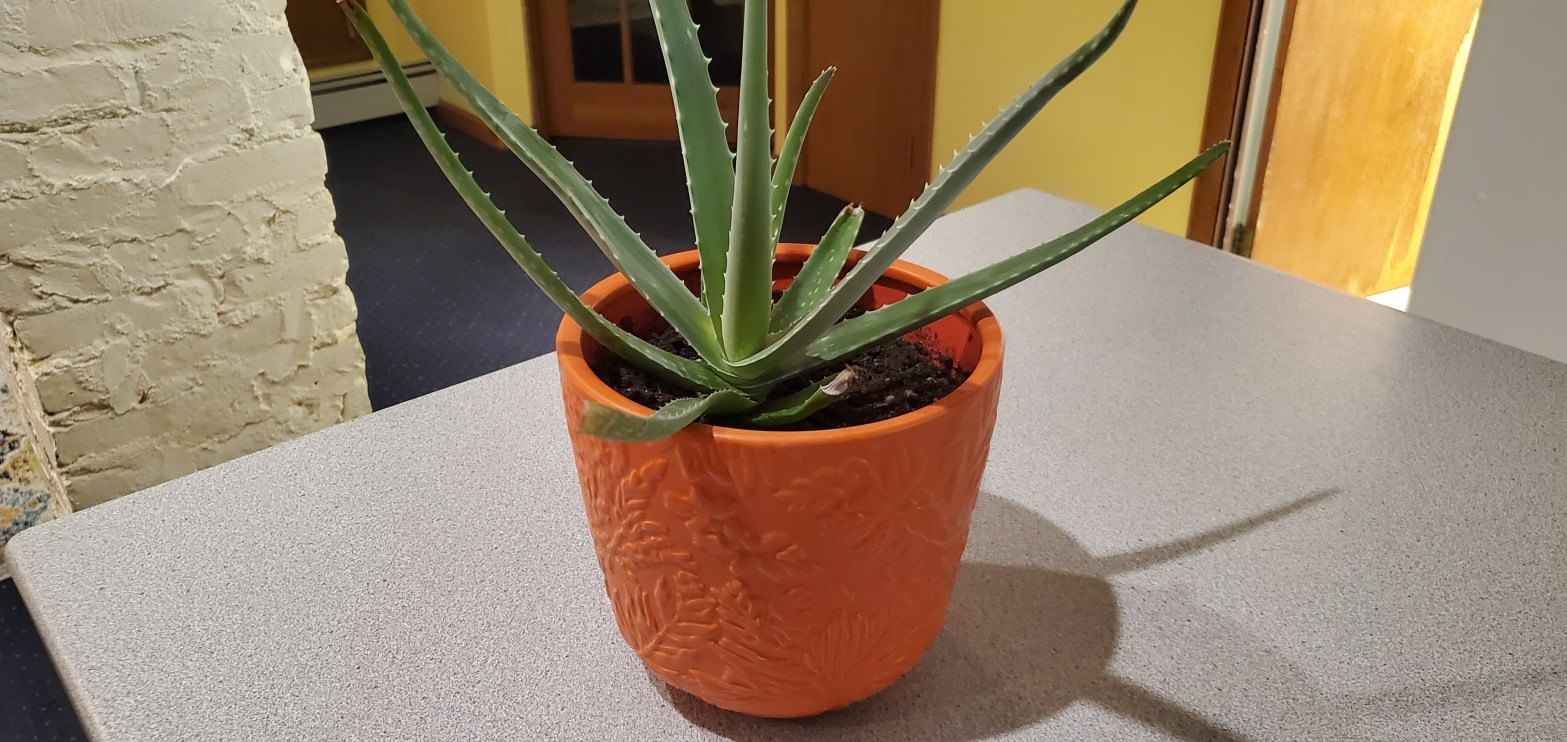
The plant that helped me realize I would be able to keep a plant alive is the aloe vera plant. As hearty and difficult to kill plant, even my beginning skills were able to keep it alive. I also found that the topical uses would my keeping the plant even more beneficial. The most well known use– burn care– was the most beneficial for me. As a natural red head, I need all the help I can get to care for my skin before and after the almost inevitable burn. While I had long sworn off aloe for sunburn treatment, I found that the pure aloe vera did exactly what I had been promised that the bottles would do. Suddenly my aloe plant could not grow fast enough. There is also a small amount of research done that shows there is a possibility that aloe plants can improve digestive health, improve oral health, clear acne, and relieve anal fissures. While none of this is meant to be used as medical advice, these uses could possibly be used with doctor supervision.
To harvest the plant to use the gel, simply remove and outer leaf from the plant and open it up, you will see the gel along the inside. I simply rub the gel directly from the leaf onto the burnt area and then let it dry. It will add moisture to the area, and ease the pain that comes with a sunburn.
The perk with all of these possible medical uses is that the plant is incredibly easy to care for. Here are some notes on the care of your aloe plant:
- Make sure the pot is made of a porous material like terracotta
- Make sure the pot has a drainage hole
- Use a succulent potting mix, not standard potting soil
- Place in bright indirect sunlight
- Water infrequently, allowing for one to two inches of dry soil between waterings. This is often 3 weeks in the summer and even less frequently in the winter
- Ensure that the plant remains in the temperature range of 55 and 80 degrees F or 13 to 27 degrees C
And that’s it!
These plants can grow quite large, and that is something to keep an eye on. You do not want to leave it in a pot that is too small– that can lead to your plant itself dying. Replanting is also easy simply:
- Clean your new pot and place mesh over the drainage hole to help keep the soil from falling out
- Gently remove the plant from the old pot and carefully brush away the soil from the roots.
- Place in the new pot that this three-quarters filled with good draining soil
- Fill soil in around the plant leaving the bottom leaves above the soil.
- Make sure not to water the plant for at least a week while it settles in its new home.
 The Plant Basics