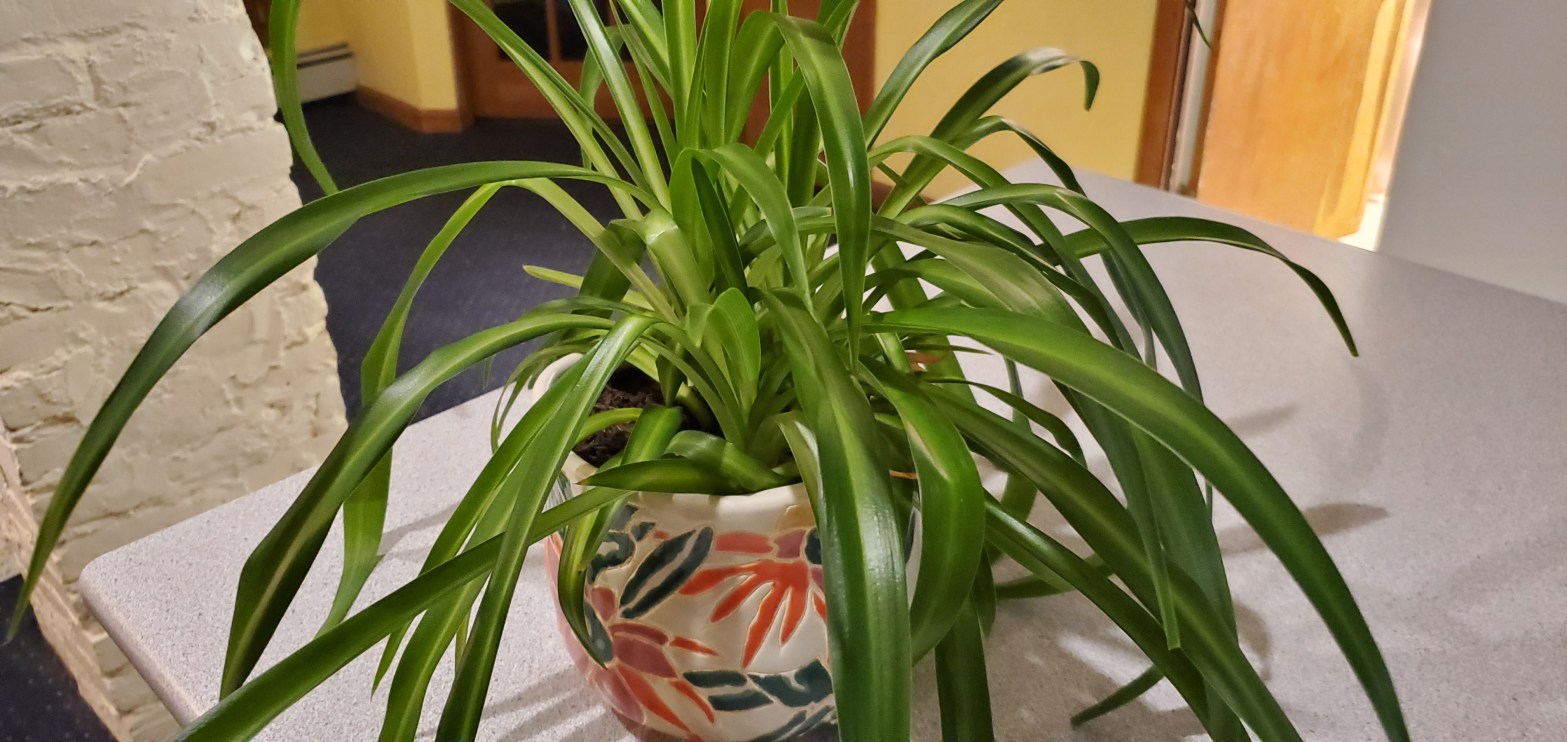
Soon after realizing my aloe plant was thriving, I went for something else that was easy to care for: a spider plant or Chlorophytum comosum. Though I began with three small offshoots of my mother’s plant, it quickly blossomed into something much larger and grew into the large pot that they swam in just a few months prior.
The plant is a South and West African plant likely brought to Europe in the late 18th century by Carl Thunberg. He was in Capetown collecting bulbs, seeds, and dried plants and it is believed that the Spider Plant was just one example of what he brought with him. They were quickly brought into Victorian homes and their popularity grew from there. They were hung to show off all of their beautiful cascading leaves.
There are a few medicinal uses. First, they are an example of an air purifying plant. They are known to remove formaldehyde, toluene, ozone, and hydrocarbon from the air. In Chinese medicine, their roots were used for treating bronchitis and bone breaks and fractures. These days, we have some research showing that Spider Plant roots can help with inflammation in the liver and suppressing tumor growth. The leaves may also be a prebiotic. All of these examples have minimal research and require more to be used for these medicinal purposes.
Regardless of if these medical purposes are legitimate or not, these are beautiful houseplants and they are incredibly easy to care for. They prefer indirect sunlight; however, they don’t mind full sunlight. Spider Plants are more apt to grow their flowers in the direct sunlight during the summer though. While it is possible to water them every day or every other day, they are not picky about exactly how much water they receive. You can water it as little as once a week or when the soil starts to get dry. However, something to note is that if you use tap water to water your plant, the ends of the leaves can become brown and singed if your neighborhood or city adds fluoride to their water. If this happens to your plant like it did to mine, all you need to do it cut the ends off with scissors. The preferred potting soil is a mix of sand and peat. With such simple care, they can easily flourish in your home and become a beautiful centerpiece for years to come.
 The Plant Basics